AI in 2026 How Intelligent Agents Are Becoming Trusted Work Partners
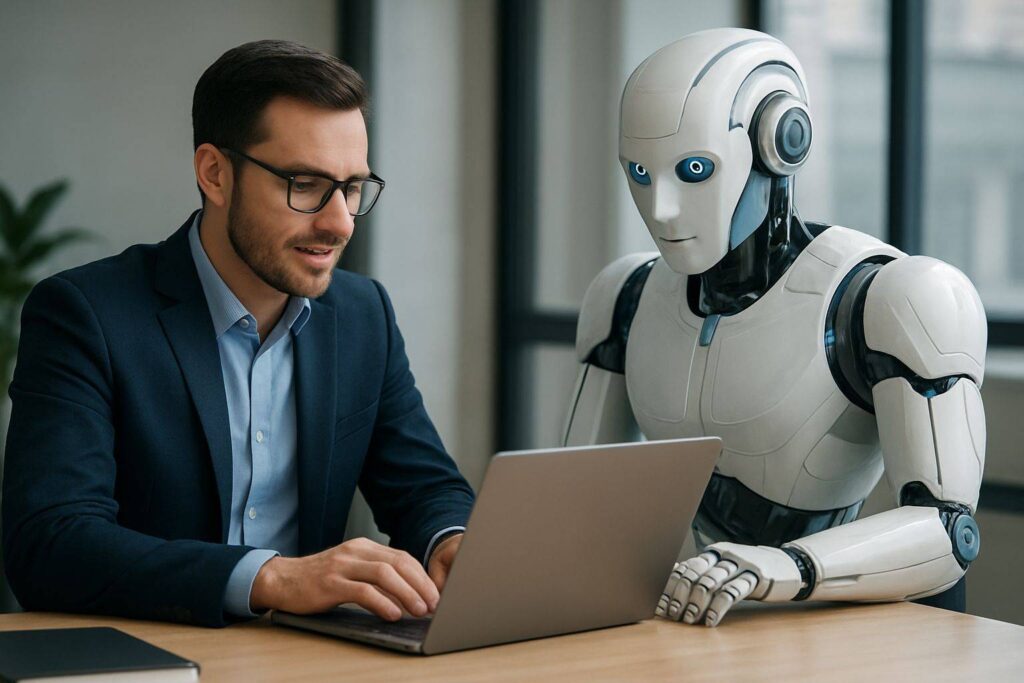


In 2026, artificial intelligence has transcended its role as a mere productivity booster, emerging as a trusted work partner in offices, labs, and creative studios...
⏱️ Estimated reading time: 5 min
Latest News










In 2026, artificial intelligence has transcended its role as a mere productivity booster, emerging as a trusted work partner in offices, labs, and creative studios worldwide. No longer confined to answering queries or automating rote tasks, AI agents now collaborate seamlessly with humans, handling complex workflows with autonomy, context awareness, and self-correction capabilities. This shift, fueled by agentic AI advancements, is reshaping industries from enterprise operations to scientific discovery, allowing teams to achieve unprecedented scale and innovation.
Unity King track the pulse of gaming and technology, we’ve seen this transformation firsthand. AI agents are powering game development pipelines, optimizing virtual worlds, and even simulating player behaviors in real-time. But this is just the tip of the iceberg, across sectors, these digital coworkers are building trust through reliability and collaboration, turning sci-fi visions into everyday reality.
Agentic AI represents the pinnacle of this evolution, enabling systems to pursue long-term goals independently while retaining memory and understanding nuanced contexts. Microsoft’s vision paints a vivid picture: small teams, augmented by AI agents, can now launch global campaigns in days, with agents crunching data, generating content, and personalizing outputs while humans focus on strategy and creativity.
These agents aren’t just helpers; they’re teammates with identities. Korn Ferry reports that 52% of talent leaders plan to integrate them into teams by 2026, complete with employee records, security IDs, and specific responsibilities. In HR, vendors are already creating profiles for AI agents, blurring the lines between human and machine contributors. Imagine a blended workforce where AI handles multi-step tasks autonomously, self-verifying outputs to minimize errors a critical leap for scaling enterprise solutions.
For gaming studios, this means AI agents designing procedural levels, balancing mechanics, or even prototyping narratives, freeing developers for high-level creativity. UKG emphasizes that without trust, AI fails; thus, cross-functional collaboration between IT, HR, and leadership is key to unlocking this potential.
Building Trust
Trust is the cornerstone of AI’s integration as a work partner. As agents proliferate, security becomes paramount. Microsoft highlights new safeguards ensuring these digital coworkers operate securely, with permissions akin to human employees. This is vital as organizations redesign jobs, breaking roles into tasks assigned to humans or AI based on strengths.
UKG’s research reveals a stark reality: two-thirds of organizations are culturally unprepared for AI, and only 53% of frontline employees feel equipped. The solution? Prioritizing people-first AI, where managers advocate for adoption and employees build targeted competencies. In this employee enablement era, autonomy, access, and personalization drive engagement, countering low trust that’s costing billions globally.
“The future isn’t about replacing humans. It’s about amplifying them.” – Aparna Chennapragada, Microsoft’s chief product officer for AI experiences
In tech and gaming, this translates to upskilling for AI literacy, fostering adaptable skills in fluid talent ecosystems. Leaders must navigate ethical challenges, with many turning to “turnarounders” fractional executives guiding AI governance.
English as the New Programming Language
One of the most democratizing trends is the shift from code syntax to natural language goal-setting. English is emerging as the dominant “programming language,” empowering non-coders to articulate visions for AI agents to execute. This lowers barriers, allowing creators from indie game devs to enterprise innovators to focus on ideas rather than implementation.
Dayforce predicts wholesale job redesigns, with AI handling domain-specific tasks via generative models. In software development, this means more applications built faster, concentrating human effort on creative, high-value work. For Unity King readers, think AI agents scripting dynamic quests or optimizing multiplayer servers based on simple directives.
AI’s role in research is revolutionary, moving from summarization to active participation. Microsoft foresees agents generating hypotheses, designing experiments, and collaborating with human and AI colleagues essentially every scientist having an AI lab assistant. This accelerates breakthroughs in materials science, medicine, and even game physics simulations.
Converging with quantum computing in hybrid setups, AI superfactories, and distributed sustainable infrastructure further amplify this. Lorien notes persistent demand for AI/ML skills, driving blended workforces with contractors and partners to meet it.
The Blended Workforce -> Humans, AI, and Strategic Shifts
2026 ushers in blended workforces as standard, mixing permanents, freelancers, and AI for elasticity in AI, cybersecurity, and cloud projects. Korn Ferry envisions human-AI power couples rewiring talent acquisition, with TA leaders as strategic advisors on transformation.
| Trend | Impact on Workforce | Gaming/Tech Example |
|---|---|---|
| Agentic AI Teams | Autonomous task execution | AI prototyping game levels |
| People-First Trust | Higher adoption via collaboration | Secure AI for player data |
| Job Redesign | Task allocation to AI/humans | AI balancing mechanics |
| Skills Shortages | Blended hiring models | Freelancers + AI for cloud gaming |
Conclusion: Elevating Human Potential
By 2026, AI agents are no longer tools but collaborative partners, elevating human roles to strategic oversight and innovation. From trusted enterprise workflows to groundbreaking discoveries, this partnership promises efficiency without sacrificing the human spark. We’re excited to see how these trends supercharge gaming, stay tuned with Unity King as we explore AI’s role in virtual realities ahead.
Related Posts
Bluesky Enhances Moderation for Transparency, Better Tracking
Bluesky Updates Moderation Policies for Enhanced Transparency Bluesky, the decentralized social network aiming to compete...
December 11, 2025
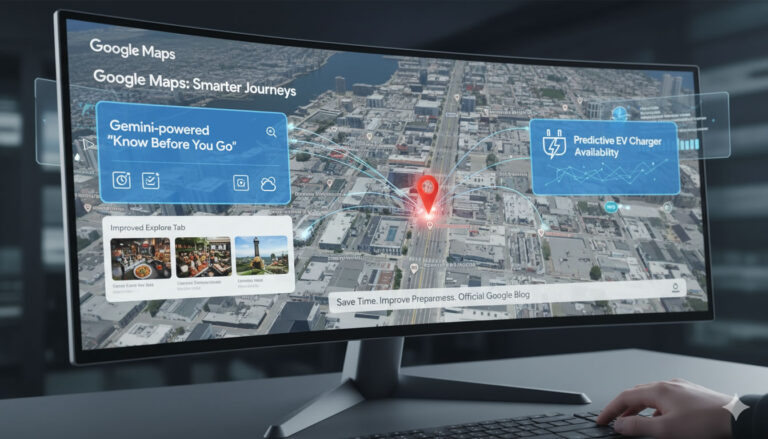
Google Maps: Gemini Tips, EV Charger Predictions & More!
Google Maps Gets Smarter: Gemini Tips & EV Updates Google Maps is enhancing user experience...
December 9, 2025

Adobe Acquires Semrush in $1.9B SEO Power Play
Adobe to Acquire Semrush for $1.9 Billion Adobe announced its agreement to acquire the search...
December 1, 2025
Leave a Reply